
Short answer
- A yard is a cubic yard of space, about the bed of a pickup truck.
- Most home projects land on the 20 yard. Heavy debris goes in the 10.
- All four sizes need the same room to deliver: about 60 feet of straight clearance.
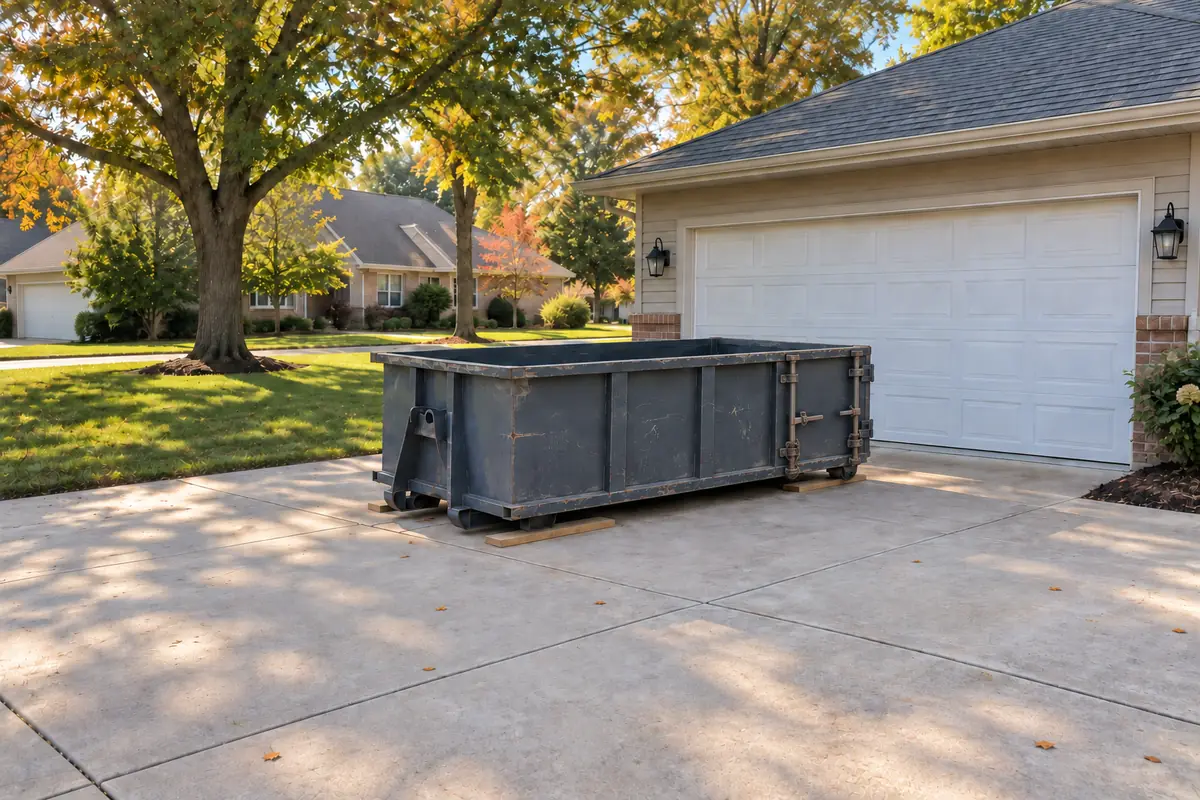
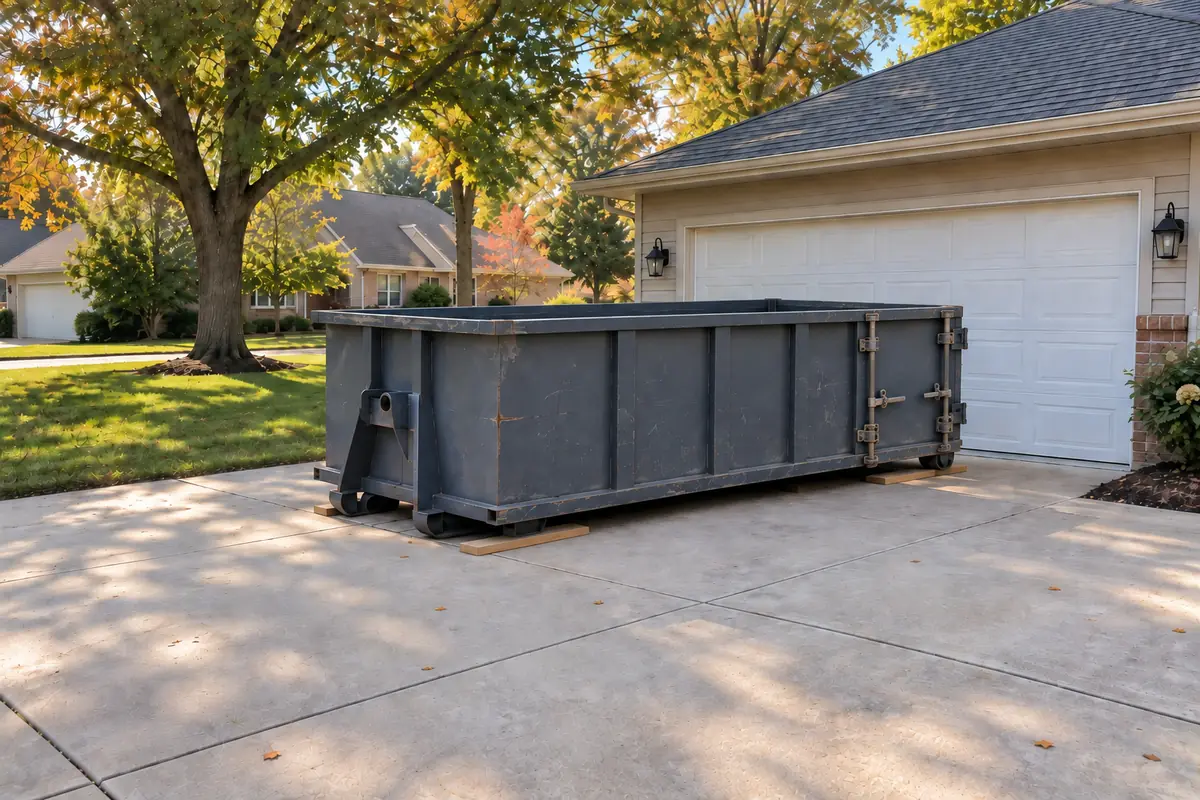
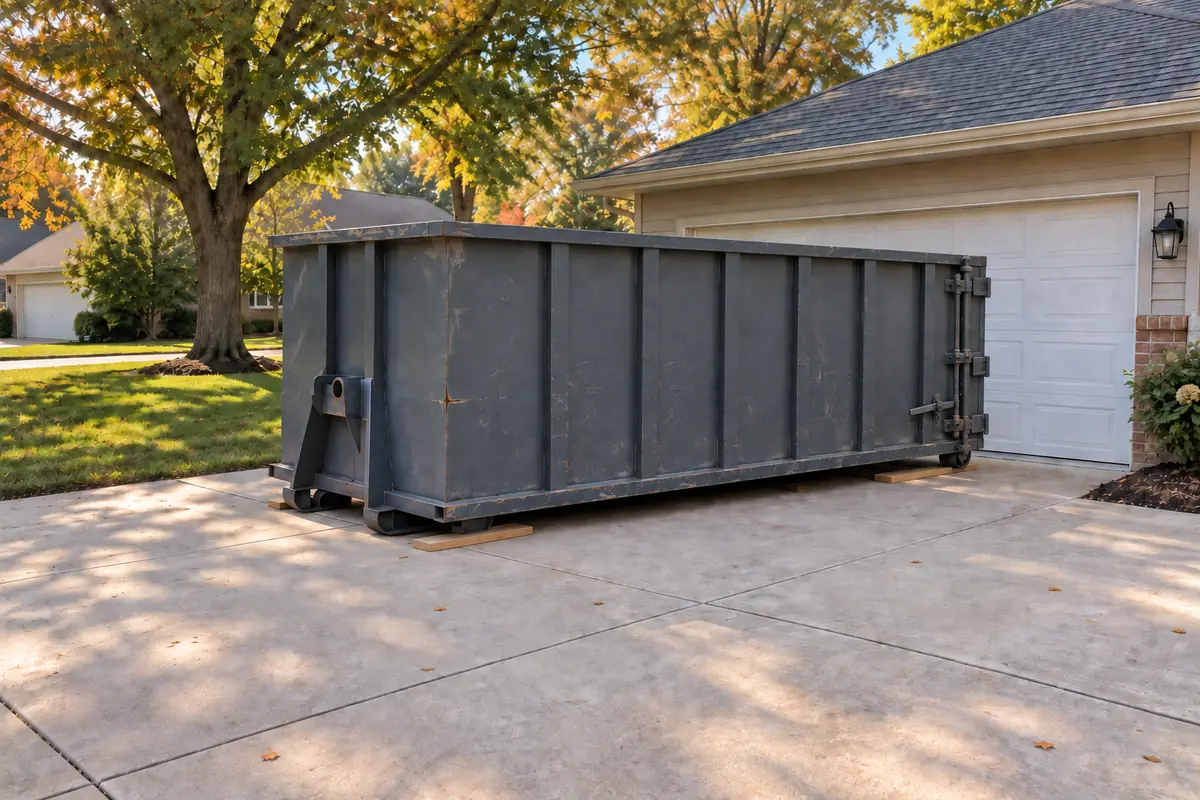
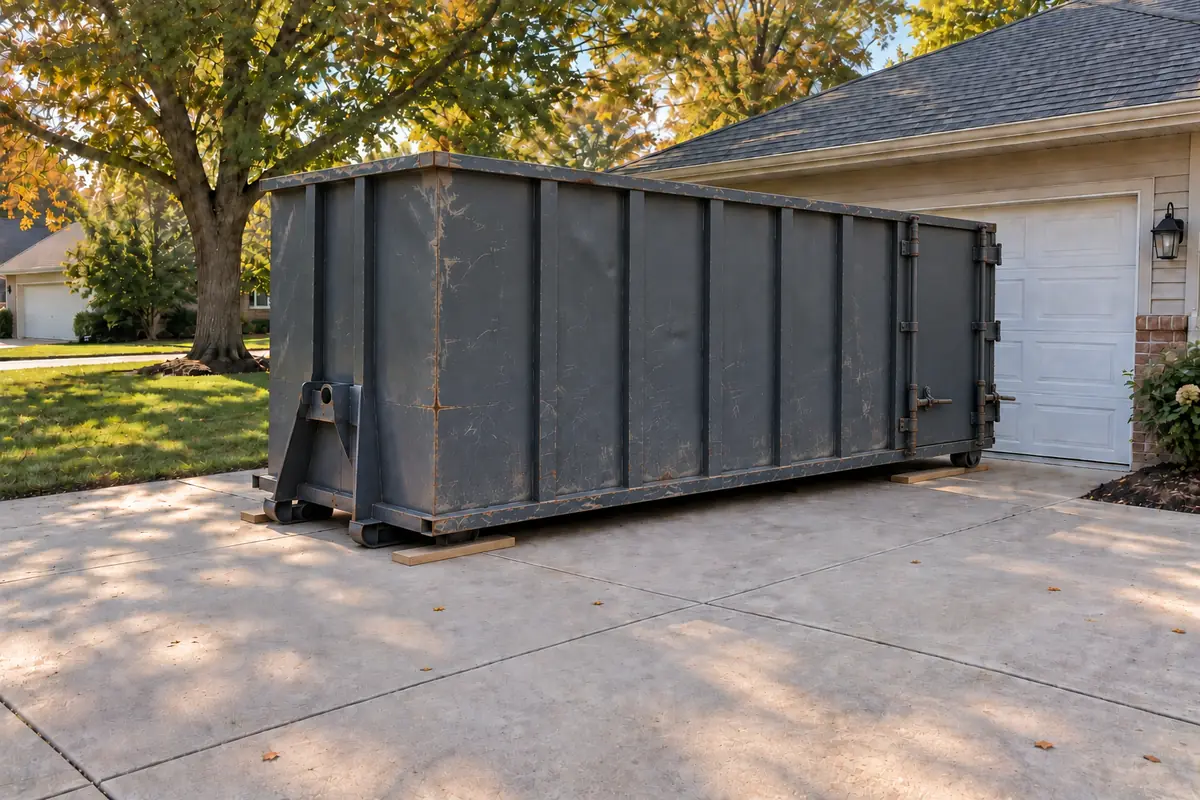
A cubic yard is a volume measurement: a box 3 feet long, 3 feet wide, and 3 feet high. The number on a dumpster describes how many cubic yards it can hold, before weight or loading rules are considered. The 10 yard is the shortest and shallowest option; 20 yard adds room for typical home projects; 30 and 40 yard containers add height and volume for larger, lighter loads. The outside length and width still matter when you plan the drop.
Estimate the debris pile, then leave room for safe, level loading. If the pile looks close to the top of one size, moving up one size is often better than paying for a second haul. Heavy debris can change that choice because concrete, brick, dirt, and shingles reach weight limits quickly. Share the material, amount, address, and timing with the hauler so the recommendation matches the actual job.
| Size | Typical dimensions | Holds about | Typical projects |
|---|---|---|---|
| 10 Yard Dumpster | 12 ft long x 8 ft wide x 3.5 ft tall | About 3 pickup truck loads | Small bathroom remodel, garage cleanout, a single room of flooring, heavy debris like concrete or dirt |
| 20 Yard Dumpster | 22 ft long x 8 ft wide x 4 ft tall | About 6 pickup truck loads | Kitchen remodel, whole-house cleanout, roof tear-off up to about 30 squares, deck removal |
| 30 Yard Dumpster | 22 ft long x 8 ft wide x 6 ft tall | About 9 pickup truck loads | Large remodels, estate cleanouts, new construction debris, multi-room flooring and drywall tear-out |
| 40 Yard Dumpster | 22 ft long x 8 ft wide x 8 ft tall | About 12 pickup truck loads | Commercial cleanouts, large demolition jobs, bulky but light debris such as siding, cabinets and packaging |
Dimensions and capacities are approximate. Confirm the actual container, weight allowance and rental days with the hauler.
Compare the four sizes
Start with the amount and type of debris. These examples help you discuss volume, weight and access with the hauler.
Which one people actually pick
- 10 yard: Choose this compact option for a bathroom gut, one room of flooring, a garage cleanout, or a controlled load of heavy debris.
- 20 yard: This is a practical starting point for a kitchen remodel, whole-house cleanout, deck removal, or a roof tear-off up to about 30 squares.
- 30 yard: Move up when an estate cleanout, multi-room tear-out, or larger remodel will create more than about six pickup loads.
- 40 yard: Use the largest option for commercial or demolition work with bulky, lighter debris such as siding, cabinets, and packaging.
Weight is the real limit
Each quote should state the included tonnage or the hauler's rule for heavy material. If the load exceeds that allowance, a per-ton overage can apply, even when the container still has empty space. Concrete, brick, dirt, tile, and shingles are dense, so they usually need the smallest practical container and a clean load. Bulky items such as furniture, cardboard, and brush use more space for their weight. Tell the hauler exactly what the debris is, how much you expect, and whether materials will be mixed. Those details help set the right size and weight terms before delivery.
Space you need for the drop
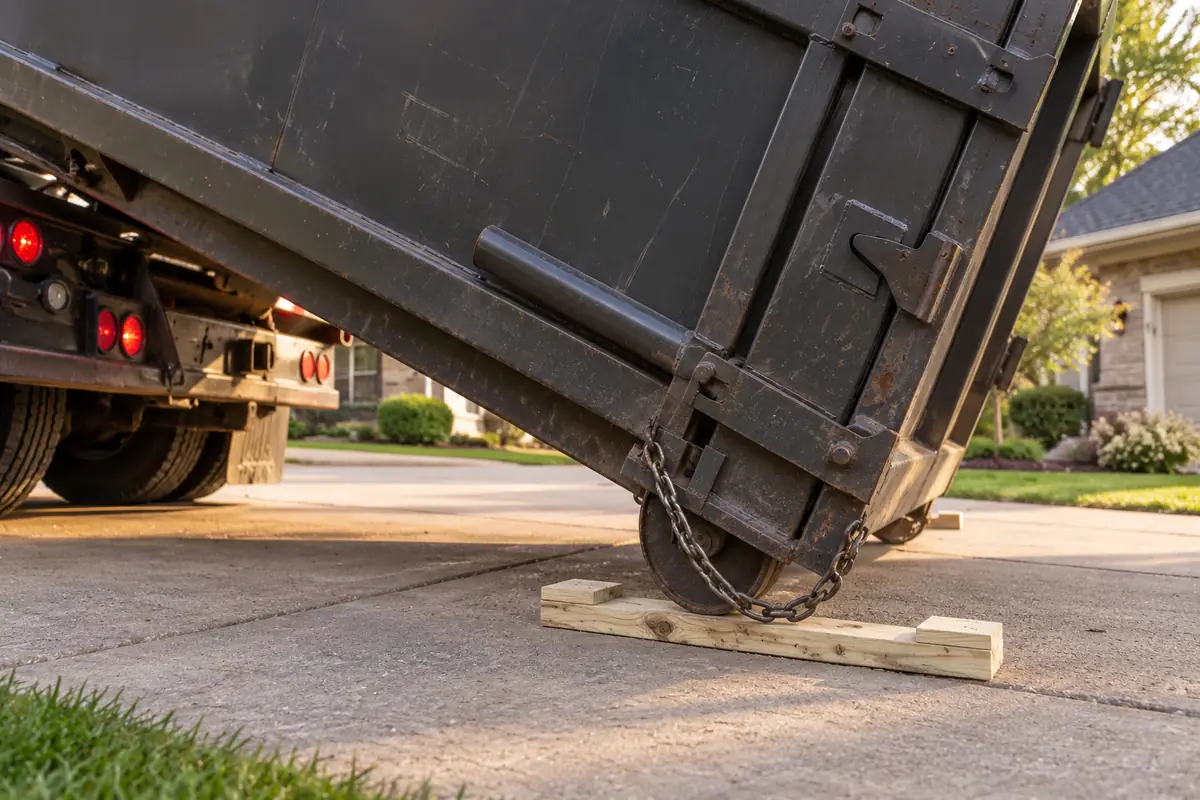
Roughly 60 feet of straight clearance, 10 to 12 feet of width and about 23 feet overhead. Drivers slide boards under the rails to protect concrete and asphalt. Public-street placement depends on the city. Confirm whether it is allowed and what approvals are needed before booking. Check the local page before choosing a drop spot.
Need a dumpster in the Kansas City area?
Call for a free quote. Tell us your town, the job and when you need a dumpster.
Next: what you can throw in · what changes the price · what delivery day looks like